
A Giant Starshade Could Photograph Another Earth
To see a faint planet beside a blazing star, one idea is simple and wild: fly a giant flower-shaped shade far in front of a telescope.
Why This Feels Impossible
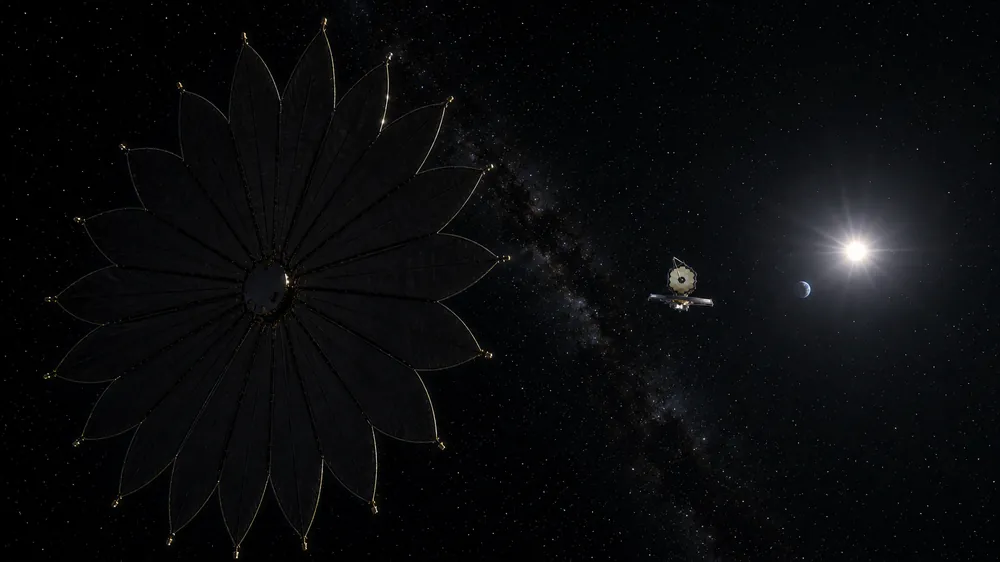
NASA has studied starshade technology for direct imaging of Earth-sized exoplanets. The problem is brutal: a star is so bright that a nearby planet is almost hidden in glare. A starshade would fly far away from the telescope and block the star before its light enters the telescope, letting the planet light come through.
The Real Science
The starshade shape is not for beauty. Its petal-like edge controls diffraction, which is how light bends around objects. The shade and telescope would need to fly in very exact alignment across huge distances. If it works, scientists could study the light from small planets and look for atmosphere clues.
What Must Go Right
Mind-Blown Version
Simple Meaning
This technology feels out of this world because it changes the normal limit we accept on Earth. Some of it may take years, and some parts may fail, but the direction is clear: space is becoming a place where humans can build power systems, factories, networks, science tools, and safety systems.